
At Holmes Fire & Safety, we want people to understand that Ohio’s burn ban is not just a seasonal reminder. It exists because spring and fall are the times of year when outdoor fires are most likely to escape. Ohio’s Division of Forestry says wildfire danger is especially high before spring vegetation greens up and again in the fall when dry leaves, dead grass, warm temperatures, and wind create ideal fire conditions.
In Ohio, outdoor open burning is prohibited in unincorporated areas from 6:00 a.m. to 6:00 p.m. during March, April, May, October, and November. That means if someone is planning to burn brush, leaves, yard waste, trash, or debris during those daytime hours in those months, it is not allowed. Ohio’s official guidance also makes clear that this includes burning in a proper burn barrel.
One of the biggest points of confusion we see is where Ohio’s stricter open-burning rules apply. According to the Ohio EPA flyer, a restricted area is not just land inside a village or city. It also includes land within 1,000 feet outside a municipality with a population of 1,000 to 10,000, and within one mile outside a municipality with a population of more than 10,000. That means some people may think they are safely “outside town” when they are still in a restricted area.
The Ohio EPA indicates that some fires are generally allowed when they meet specific rules. Barbeques, campfires, and cookouts are typically allowed inside and outside restricted areas if the wood stack is no larger than 2 feet high by 3 feet wide and only clean, seasoned firewood or equivalent is used. Ceremonial fires are also allowed under certain conditions, but the wood stack can be no larger than 5 feet high by 5 feet wide, the fire can last no longer than three hours, and advance notification may be required in restricted areas.
That does not mean everything else is fair game. The same Ohio EPA guidance shows that agricultural waste, residential waste, and land-clearing waste are handled very differently. Some burns require advance notification to Ohio EPA, some require prior written permission, and some are not permitted in city limits at all. In other words, just because a fire is outdoors does not mean it is automatically legal.
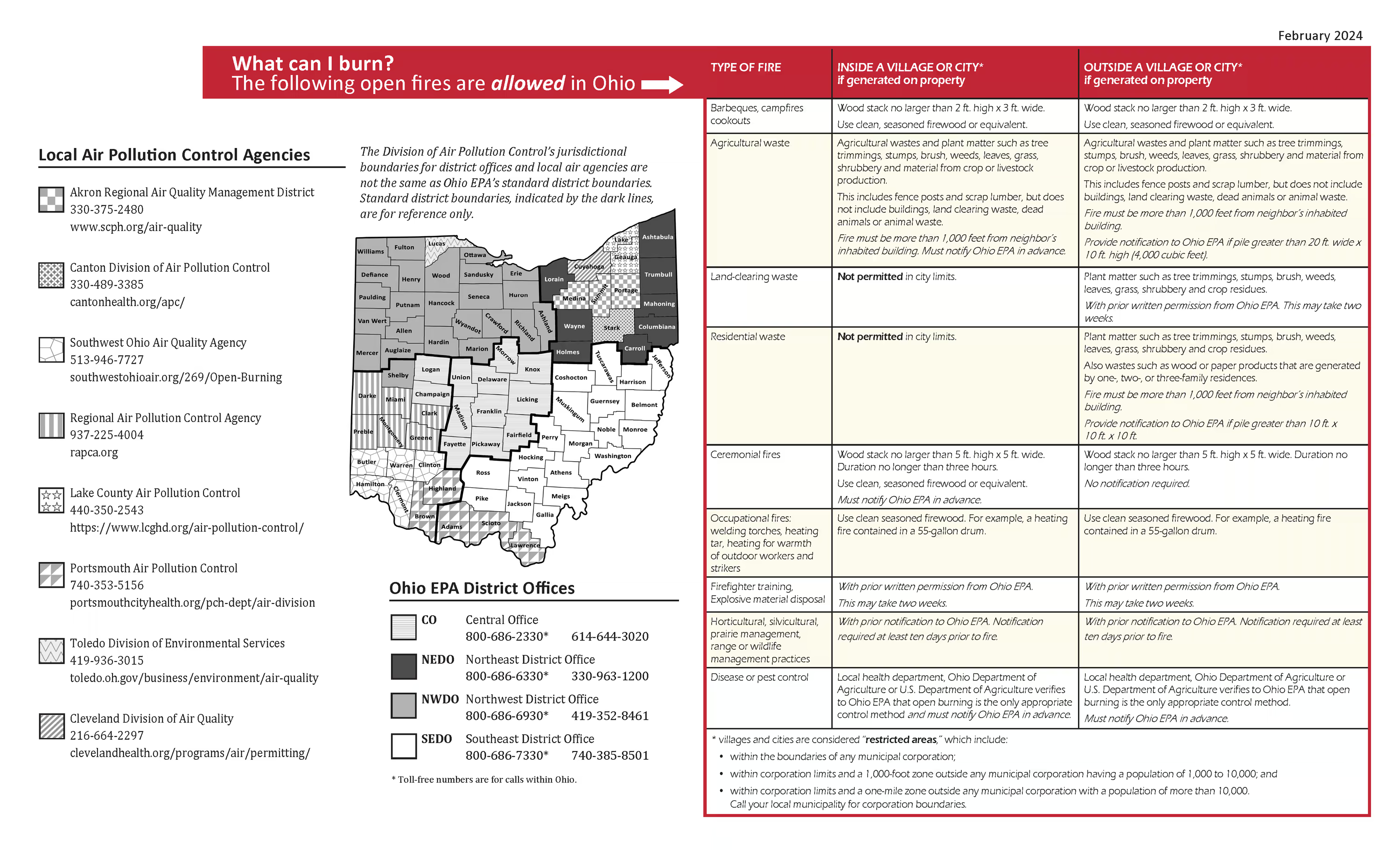
This is where people often get themselves into trouble. Ohio EPA says some materials may not be burned anywhere in the state at any time. That includes garbage, food waste, dead animals unless approved for disease control, and materials containing rubber, grease, asphalt, or petroleum, such as tires, plastics, and auto parts. The Ohio EPA also says open burning is not allowed when air pollution alerts or warnings are in effect, when smoke would block visibility on roads, railroads, or airfields, or when waste was generated somewhere else and hauled in to be burned.
At Holmes Fire & Safety, we think the statistics make this issue impossible to ignore. Ohio EMA says the state averages about 800 wildfires each year, burning roughly 4,000 to 5,000 acres of forest and grassland within the Division of Forestry’s fire protection district. These are not rare events, and many start with outdoor burning that gets away from the person who lit it.
There is also a health side to this. Ohio EPA says open burning can release toxic fumes, and burning household waste is one of the nation’s largest known sources of dioxin. The agency also warns that pollutants from open burning have been linked to asthma, respiratory illness, nervous system damage, kidney and liver damage, and reproductive or developmental disorders.
The consequences can be more serious than many people realize. Under Ohio’s open burning rules, the director may assess administrative penalties of up to $250 per day for illegal open burning of residential waste and up to $1,000 per day for illegal open burning of other wastes. Ohio EPA also warns that illegal open burning can result in substantial penalties.
There can also be criminal and financial consequences if a fire spreads. Ohio law says no one may set a fire that, through negligence, spreads beyond its immediate confines to a structure, field, or wood lot. Violating that section is a fourth-degree misdemeanor.
Our message is simple: before lighting any outdoor fire, make sure you know when you can burn, where you can burn, what you can burn, and whether Ohio EPA or local officials must be notified first. Ohio EPA also makes clear that local ordinances cannot be less strict than state law, so checking with your local fire department or municipality is always the safest move.
When people respect Ohio’s burn laws, they protect their own property, their neighbors, their firefighters, and the air everyone breathes. At Holmes Fire & Safety, we believe prevention matters, and in Ohio, that starts with taking the burn ban seriously.

